By [Your Name], Senior Sports and Culture Reporter
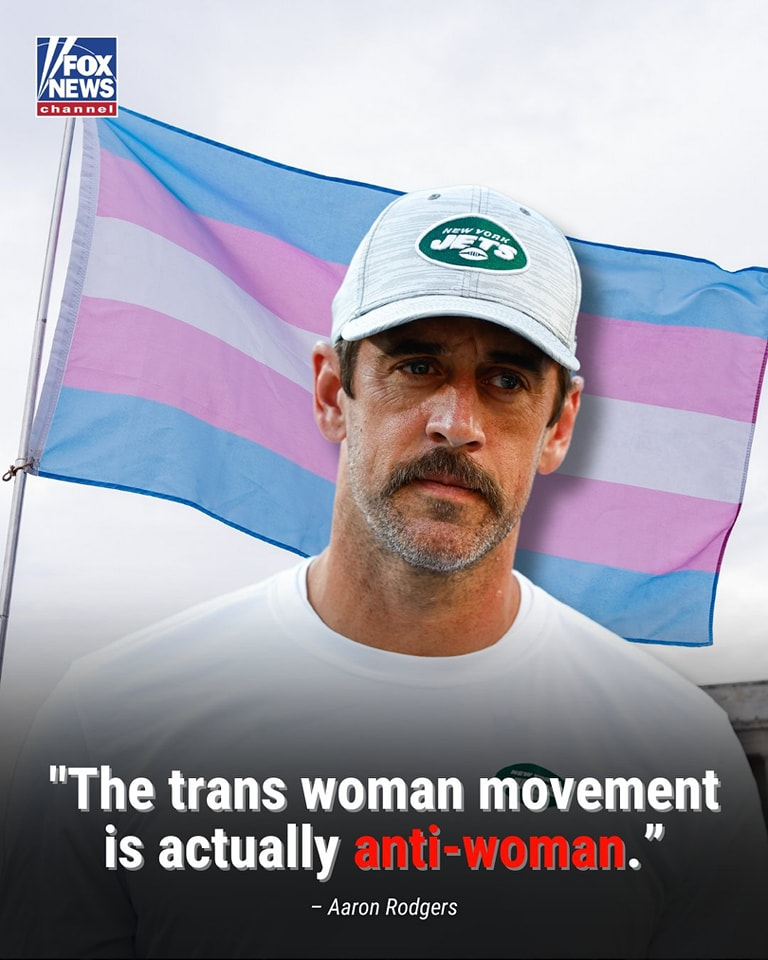
In a move that has ignited passionate debate across the sports world and beyond, NFL quarterback Aaron Rodgers has publicly spoken out against the inclusion of biological males in women’s sports, calling it an issue of fairness and competitive integrity.
Rodgers, known for his unapologetic opinions on everything from vaccine mandates to media narratives, added his voice to one of the most contentious topics in modern athletics. In a recent appearance on a popular podcast, the four-time NFL MVP laid out his views with candor and conviction, sparking both backlash and praise from athletes, fans, and public figures across the political spectrum.
Rodgers’ Statement: “We’re Losing What It Means to Compete Fairly”
Speaking on The Real Playbook, Rodgers addressed the growing number of cases where transgender women (biological males) have competed in women’s sports categories, particularly at the collegiate and Olympic levels.
“I’m not here to shame anyone or deny someone’s identity,” Rodgers said. “But when we allow biological males to compete against biological females, we’re not preserving equality—we’re destroying it. Women have fought for decades to have a level playing field, and we’re watching it be erased in the name of inclusion.”
Rodgers acknowledged the sensitivity of the topic, stating that discussions should be “grounded in science and reason,” not fear or political correctness. He emphasized that his stance comes from respect for female athletes and the value of fair competition.
Mixed Reactions from Sports Community
Rodgers’ comments have sparked a firestorm of responses. Many prominent athletes, both active and retired, voiced support for his position.
- Martina Navratilova, legendary tennis champion and vocal LGBTQ+ advocate, tweeted: “Aaron Rodgers is right—biological realities matter in sport. It’s not transphobic to say so.”
- Riley Gaines, former NCAA swimmer who competed against transgender athlete Lia Thomas, praised Rodgers for “speaking truth when others stay silent.”
- Meanwhile, Megan Rapinoe, U.S. soccer star and LGBTQ+ activist, criticized Rodgers’ comments as “fear-based and dismissive of the trans community,” arguing that inclusion should not be sacrificed for fear of losing.
Political and Media Reactions
Unsurprisingly, the political world was quick to weigh in. Conservative commentators hailed Rodgers as a “courageous voice of reason” in a culture they say is too afraid to address biological differences. Progressive media outlets, on the other hand, accused him of “platforming transphobic narratives” under the guise of fairness.
Cable news shows lit up with debates over his statements. Fox News praised his “common sense stance,” while MSNBC labeled the remarks “divisive and damaging to marginalized communities.”
The Science and Policy Debate
At the core of the controversy lies an ongoing scientific and legal debate: how to balance transgender inclusion with competitive fairness. While many sporting bodies like the NCAA and International Olympic Committee have adjusted their policies to allow transgender athletes to compete based on hormone levels, critics argue that physiological advantages such as muscle mass, bone density, and lung capacity are not entirely mitigated by hormone therapy.
Rodgers echoed these concerns:
“No one’s saying trans people shouldn’t play sports. But maybe we need open divisions or more nuanced rules. This isn’t hate—it’s about protecting women’s sports.”
What This Means for Rodgers—and the League
Rodgers’ comments add to his growing reputation as a maverick unafraid to voice controversial opinions. Whether it’s on COVID-19 protocols, government overreach, or now transgender participation in sports, Rodgers continues to stir public discourse.
As of now, the NFL has not issued any statement regarding Rodgers’ remarks. His current team, the New York Jets, declined to comment, saying the quarterback was “speaking in a personal capacity.”
Final Thoughts: Culture War or Honest Concern?
As America continues to wrestle with the balance between inclusion and fairness, Aaron Rodgers has planted his flag in the debate—firmly, publicly, and unapologetically.
Whether you agree or disagree, one thing is clear: Rodgers is not backing down. And in doing so, he’s ensured that this conversation—uncomfortable though it may be—won’t be going away any time soon.
Let me know if you want a Vietnamese translation, summary for social media, or timeline of the issue.